
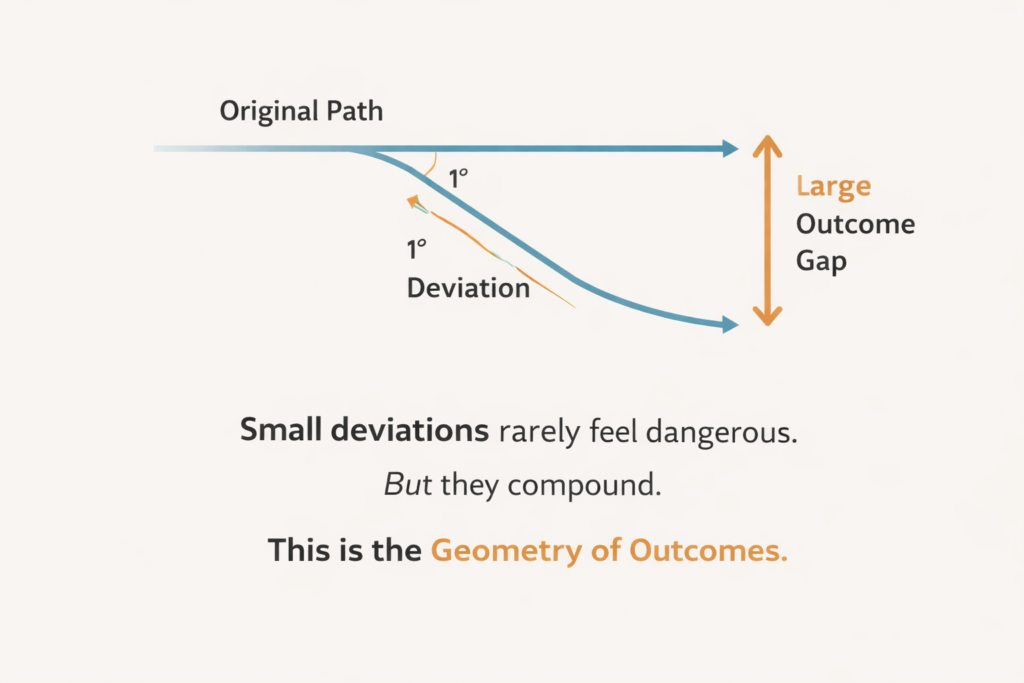
The diagrams represent five stages of outcome formation.
1. Initial Direction
Every system begins with a direction.
Examples
career path
corporate culture
financial habits
institutional norms
At this stage, deviation is almost invisible.
2. Small Deviation
A small force alters direction.
Examples
incentive misalignment
ethical compromise
habit change
policy shift
The deviation feels trivial.
3. Compounding Drift
Distance increases.
Now the system is moving away from its original trajectory, but the change still appears gradual.
This is the focus of:
The Drift Effect
4. Structural Lock-In
The new direction becomes embedded.
Examples
organizational incentives
social norms
financial structures
bureaucratic systems
This is where The Framework lives.
5. Outcome Divergence
The distance between trajectories becomes undeniable.
Examples
institutional collapse
financial success
relationship failure
national transformation
The outcome appears dramatic, but the cause was incremental.